Socialization Month - Plans
Mar 08, 2026
Plans
One question we get early on in the training/socialization process, is how to plan, either things to do ahead of time to get ready for your puppy, or how keep track of your training. Also how to make a plan and sticking to it, and whats the best way to go about it. We do have resources, (including forms and sheets), in our Academy that we share, explain, and help modify, however a lot of this is really up to the individual.
Start at the beginning
How do I plan for a puppy? Let's start at the beginning with things you can do before bringing home your puppy (or right now if your puppy is already here) to help things go as smoothly as possible start a list with these:
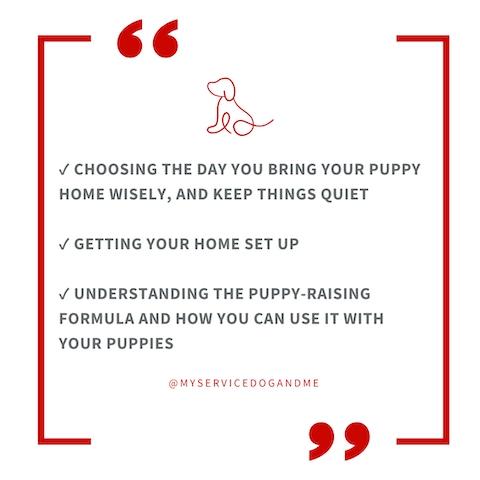
Just this simple things can make you and your puppies transition go smoothly
What other things do I need to plan for ahead of time?
1.) Crate training
2.) Potty Training
3.) Puppy proofing
4.) Find a vet
5.) Early training problems, (and how to handled them), such as: jumping, nipping, chewing.
Having a plan in place not only makes your job easier, but you can share the plan with other family members so your all on the same page. Our The Puppy Handbook has information on crate training, play biting, chewing, and potty training.
Training plans and logs.
One thing all great trainers have in common is planning and keeping training logs. They have training plans for their behaviors, and they have plans for things like individual sessions, days, and/or weeks.
What is the best way to keep track and why do we need to? There are lots of ways to keep track of your training plans, and picking which one is best for you takes trial and error.
- Logs: you can use a simple notebook or even put the information on your phone. Things like:
• what you practiced
• what went well
• what didn't go well
A good way to do this is to actually make notes after your session, with plans for your next session based on your results. Log's don’t have to have long enteries, just simple notations can help guide you. Or you can find a form that works better for you and use that.
- Videos: we highly recommend making videos of your training at least on occasion of your having an issue with one part of your training. These are invaluable for being able to see:
• mechanics
• distractions
• body language
- Other: There are apps on your phone you can keep logs, (and of course videos), on, calendars are a great one for short notes and goals, and also external apps avilable that include blank plans, tips and ideas to keep track of your training.
Breaking it down- The weekly training plan
Look over this FREE sample of a our weekly training plan and look at the explanation below. 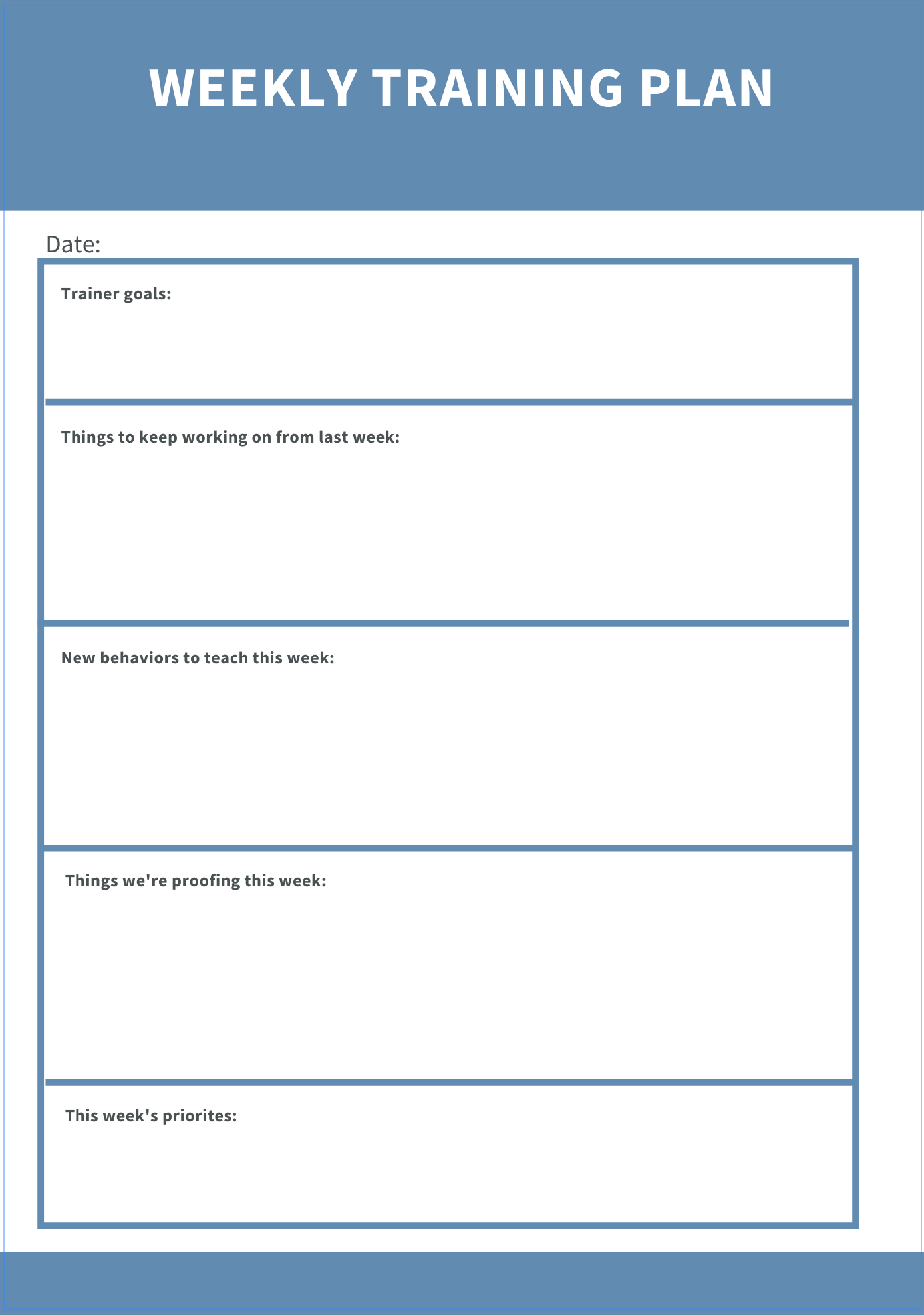
What do I do with the logs, plans and videos? It’s important to do a weekly review and get ready for the following week. You can see what needs to be worked on, make changes depending on you and your puppies progress, adjust the schedule as needed, or simply see all the good things that you have accomplished. Celebrate the wins.
Step 1: Review notes and videos
Step 2: Set goals for yourself
Step 3: What things do I need to keep working on?
Step 4: What things, if any, can I start proofing?
Step 5: What things are we starting this week?
Step 6: Choose three priorities.
Step 6 is very important as life can often get in the way of our training. But if we want to make progress, we have to train regularly. So, one thing that can help is to have three priorities. That way during a week that is busy, or perhaps your not feeling your best, you can work on these priorities. Be sure to make at least one something simple like house manners.
Important tip: It’s very important to take days off, and it’s actually a good idea to put them on your training plan each week. You can certainly change them but try to take at least a couple each week.
How long do you use plans? How long should I keep them? Why keep them at all?
Most trainers use plans throughout their SD training, which can be up to 2+ years. When you get into more complicated training such as tasks and PA (public access), these plans/logs can become invaluable. Many owner/trainers keep their logs for the working life of the dog, and they come in handy if you ever train another SD. Trainers also keep them for general reference, but also because it is proof of their service dogs training in the event of legal challenges. (Check the ADA website for more information on service dog laws and rules or for judicial information.)
https://www.ada.gov/topics/service-animals/
🗓️ Next Week: Socialization What it is, what it isn’t.
Sneak peak: As you probably know, socialization is a big deal for a service dog, it's what sets them up for their entire career. The problem is that poor socialization can do more harm than good, and there are so many misconceptions and plain old bad advice floating around out there.
Resources
1.) “How to create weekly training plans for your service dog in training?"
https://www.youtube.com/watch?v=hp6ayNblWYE&t=417s
2.) Come join us in our FREE Facebook group: Training with positive reinforcement (positive reinforcement training).
My Service Dog and Me Team
